Samantha Lewis
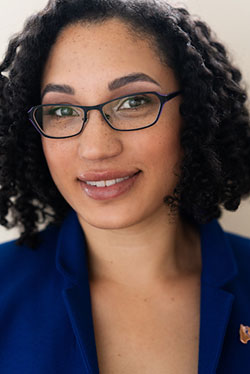
Assistant Professor of Cell Biology, Development and Physiology

Research Interests
Lewis lab research investigates how animal cells ensure the continual energy supply they need to survive, and how this goes awry in human disease. The laboratory team focuses on mitochondria, the “powerhouse of the cell”, which harbor their own genomic blueprint called mitochondrial DNA. Dr. Lewis’ experimental approach leverages live microscopy at high spatial and temporal resolution, single-cell analyses of DNA replication and transcription, gene editing, proteomics, and genetics to reveal how cells replicate, segregate, and inherit this “neglected genome”.
Current Projects
Flow of genetic information through mitochondrial networks, and re-wiring in stress and inflammation
The organization of intracellular organelles like mitochondria is fundamental to understanding cell function and the etiology of human disease. Unlike many organelles, mitochondria can’t be built de novo, but instead bud from pre-existing mitochondrial mass. Because these transient, microscale events are difficult to capture, the mechanisms underlying mitochondrial biogenesis remain controversial. A central theme of my work is the use of high-resolution microscopy to define the spatiotemporal coordination of mitochondrial biogenesis. In this work, we sought to determine whether all mitochondria are equally competent for biogenesis, or instead exhibit functional specialization. We discovered that mitochondrial DNA gene expression, a key step in biogenesis, is spatially heterogeneous, with a subset of mitochondria acting as specialized hubs for translation of electron transport chain (ETC) proteins. During RNA processing stress, these mitochondria undergo interior reorganization to form stress bodies that sequester mRNAs and ribosomal components; we propose this protects the mitochondrial proteome. Our work reveals a previously unrecognized layer of post-transcriptional control over mitochondrial biogenesis in human cells that informs how these essential organelles react to stress.
There and back again: Mitochondrial biogenesis and quality control in long axons
How long-lived neurons maintain healthy mitochondria throughout their extreme polarized geometry has been a major unresolved question in cell biology. This is important because mitochondria buffer calcium, produce hormones, and contribute to neurotransmitter biosynthesis in addition to their bioenergetic roles. Our recent work on mitochondria functional specialization opened the door to attack this problem from a new angle: could division of labor among mitochondrial sub-classes make maintaining these organelles more efficient? Particularly in extreme neuronal processes, such as meter-long axons? In this study, we discovered a population of “mother mitochondria” devoted to ETC biogenesis in the axons of sensory neurons. Mother mitochondria undergo regular cycles of self-renewal and differentiate their daughters into other, non-replicative classes through asymmetric division in a process similar to stem cell differentiation. Our work overturns the dogma that mitochondria are exclusively produced in the neuronal cell body, establishing a new paradigm for how neurons remain functional over a lifetime via mitochondrial differentiation.
Selected Publications
Waingankar TP, Zurita C, Lang AE, Vuong C, Shami A, Bautista DB, Drerup C, Lewis SC.
Self-renewal of neuronal mitochondria through asymmetric division.
bioRxiv 2025.12.17.694973.
Holt KB, Zurita C, Teryoshin L, Lewis SC, EF Koslover.
Diffusive Spreading Across Dynamic Mitochondrial Network Architectures.
Proc. Natl. Acad. Sci. U.S.A. 123 (15) e2523913123, 10.1073/pnas.2523913123. (2026).
Boone C, Judge S, Shami A, Danna B, Ball A, Waingankar TP, Saqub H, Divakaruni AS, Lewis SC.
Saturated lipid stress attenuates mitochondrial genome synthesis in human cells.
bioRxiv 2025.07.28.667051.
Rose K, Herrmann E, Kakudji EV, Lizarrondo J, Yasemin Celebi A, Wilfling F, Lewis SC, JH Hurley.
In situ cryo-ET visualization of mitochondrial depolarization and mitophagic engulfment.
Proc. Natl. Acad. Sci. U.S.A. 122 (31) e2511890122, https://doi.org/10.1073/pnas. (2025).
Begeman A, Smolka JA, Shami A, Waingankar TP, Lewis SC.
Spatial analysis of mitochondrial gene expression reveals dynamic translation hubs and remodeling in stress.
Science Advances, 11, eads6830 (2025). DOI:10.1126/sciadv.ads6830.
Begeman A, Babaian A, Lewis SC.
Metatranscriptomic analysis uncovers prevalent viral ORFs compatible with mitochondrial translation.
mSystems. 2023 May 18:e0100222. DOI:10.1128/ msystems.01002-22. PMID: 37199915.
Lewis SC, Uchiyama LF and J Nunnari.
ER-mitochondria contacts couple mtDNA synthesis with mitochondrial division in human cells.
Science, 353(6296): aaf5549. doi: 10.1126/science.aaf5549.
Last Updated 2026-10-10