Faculty and Research
Faculty by Name
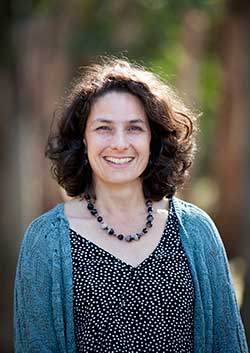
Nicole King
|
Nicole King
Assistant Professor of Genetics, Genomics and Development
Lab Homepage: http://kinglab.berkeley.edu/Research Interests
-
We study choanoflagellates and the evolution of multicellular animals from their unicellular ancestors.
The origin of animals represents one of the pivotal transitions in life's history, and one of its greatest unsolved mysteries. While the fossil record remains silent regarding the rise of multicellularity, the genetic and developmental foundations of animal origins may be deduced from shared elements among extant animals and their protozoan relatives, the choanoflagellates. To better understand the origin and evolution of animals, our goals are to [1] determine the minimal genomic complexity of the common ancestor of animals, [2] elucidate the ancestral functions of genes required for multicellular development, [3] characterize choanoflagellate cell and developmental biology, and [4] test the hypothesis that the emergence of multicellular animals stemmed, in part, from the evolution of new modes of gene regulation.
Current Projects
-
Using comparative genomics to investigate the ancestral animal genome
A key question in the origin of animals concerns how and when the "toolkit" of animal genes was assembled. To test whether genes required for animal development evolved before the origin of animal multicellularity, we are comparing sets of genes expressed by choanoflagellates, animals, Fungi, Plants, and unicellular eukaryotes. Genes shared only by choanoflagellates and animals were likely present in their common ancestor and may shed light on the transition to multicellularity. This work has already provided evidence for the expression in choanoflagellates of protein families (e.g. receptor tyrosine kinases, cadherins, and C-type lectins) required for animal cell signaling and adhesion. Our current goals are to characterize the diversity of genes encoding transcription factors, signaling and adhesion genes, and cytoskeletal components in choanoflagellates, and to examine the history of certain protein families prior to the origin of animals.
Assaying the ancient functions of genes required for multicellular development
The finding of signaling and adhesion gene homologs (e.g. cadherins and receptor tyrosine kinases) in choanoflagellates raises questions about how these genes functioned in the unicellular common ancestor of choanoflagellates and animals, and what role they played in the origin of multicellularity. To determine the function of specific genes in choanoflagellates, we are developing techniques for manipulating gene activity in vivo. Inferences about gene function in diverse choanoflagellates provide an important reference point for studies of gene family evolution in animals.
Cell and developmental biology of choanoflagellates
The mechanisms by which choanoflagellates form colonies, establish cell polarity, and reproduce should provide crucial insights into the transition to multicellularity, but little is known about their cell or natural history. Therefore, we are examining the life cycles of diverse choanoflagellates using techniques ranging from classical protistology to electron and immunofluorescence microscopy to bioinformatics.
Selected Publications
-
The genome of the choanoflagellate Monosiga brevicollis and the origins of metazoan multicellularity. [Nicole King, M. Jody Westbrook1*, Susan L. Young1*, Alan Kuo, Monika Abedin, Jarrod Chapman, Stephen Fairclough, Uffe Hellsten, Yoh Isogai, Ivica Letunic, Michael Marr, David Pincus, Nicholas Putnam, Antonis Rokas, Kevin J. Wright, Richard Zuzow, William Dirks, Matthew Good, David Goodstein, Derek Lemons, Wanqing Li, Jessica Lyons, Andrea Morris, Scott Nichols, Daniel J. Richter, Asaf Salamov, JGI Sequencing, Peer Bork, Wendell A. Lim, Gerard Manning, W. Todd Miller, William McGinnis, Harris Shapiro, Robert Tjian, Igor V. Grigoriev, Daniel Rokhsar] Nature, in press.
The premetazoan ancestry of cadherins. [M. Abedin and N. King] Science, in press.
The origins of multicellularity: a multi-taxon genome initiative. [I.Ruiz-Trillo, G. Burger, P.W. Holland, N. King, B.F. Lang, A.J. Roger, M.W. Gray (2007) Trends in Genetics, Jan 31(Epub ahead of print)]
Early evolution of animal cell signaling and adhesion genes. [S.A. Nichols, W. Dirks, J.S. Pearse, and N. King (2006), PNAS, 103(33):12451-6]
Choanoflagellates. [N. King (2005), Current Biology, 15(4):R113-4.
The unicellular ancestry of animal development. [N. King (2004), Developmental Cell, 7(3): 313-25]
Evolution of key cell signaling and adhesion protein families predates the origin of animals. [N. King, C.T. Hittinger, and S.B.Carroll (2003) Science, 301(5631):361-3]
Genome-scale approaches to resolving incongruence in molecular phylogenies. [A. R. Rokas, B.L. Williams, N. King, and S.B. Carroll, (2003), Nature, 425 (6960):798-804]
Conflicting phylogenetic signals at the base of the metazoan tree. [A.R. Rokas, N. King, J.R. Finnerty, and S.B. Carroll (2003), Evolution and Development, 5(4): 346-359]
A receptor tyrosine kinase from choanoflagellates: Molecular insights into early animal evolution. [N. King and S.B. Carroll (2001) PNAS 98: 15032-15037]
Last Updated 2007-12-17
