University of California | College of Letters & Sciences Home | Contact Us
Department of Molecular and Cell Biology

Search Site

Upcoming Events

William Jorgensen

Discovery of potent enzyme inhibitors guided by free-energy calculations

Mon, Nov 9, 4:00 pm

View Details >

William Jorgensen

Discovery of potent enzyme inhibitors guided by free-energy calculations

Mon, Nov 9, 4:00 pm

View Details >

Nicole King

The unicellular ancestry of animal development

Tue, Nov 10, 4:00 pm

View Details >
View All Events >


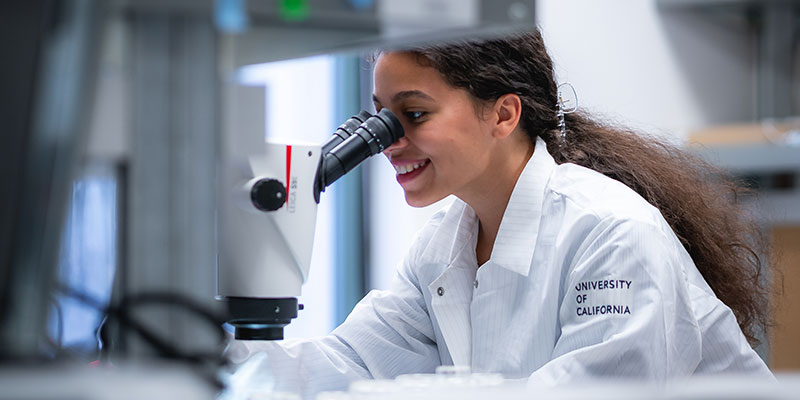
Welcome to the Department of Molecular & Cell Biology at the University of California at Berkeley. The photos above represent our five divisions: Neurobiology, Genetics, Genomics & Development, Cell & Developmental Biology, Immunology and Pathogenesis, Biochemistry & Molecular Biology. Click on any of the photos above to see more details about each of the five Divisions.

Recent News

Faculty Recruitments for MCB

The Department of Molecular and Cell Biology (MCB) seeks applications for one faculty position. The position will be a 9-month academic year appointment. We seek candidates with Ph.D. and/or M.D. degrees who have demonstrated excellence, originality and productivity in research. Candidates at both the junior (non-tenured) and senior (tenured) faculty level will be considered. In addition to evidence of a strong research program, candidates are expected to have an interest in undergraduate and graduate teaching.

Read more...
 
Two Nobel Prize recipients have UC Berkeley ties

The bulk of the work for which Elizabeth Blackburn, Carol Greider and John Szostak won this year's Nobel Prize in Physiology or Medicine took place at the University of California, Berkeley, when Blackburn was a professor of molecular and cell biology and Greider was her graduate student.

Read More...

 
The Immortality Enzyme

Kathleen Collins, a professor in the Department of Molecular & Cell Biology, has made it her business to understand everything she can about this so-called immortality enzyme. Her discoveries about its regulation, assembly and connections to human disease are leading the way toward methods to regulate its production and perhaps treat disorders such as cancer.

Read More...


Research Spotlight